


GRACE-Epi Monthly Methods webinars
Free training webinars considering novel methodologies, theoretical approaches and lenses relevant to the field of arts and health, partnering with universities globally.

Introduction
Global Research on Arts and Cultural Engagement – Advancing Epidemiological Methods (GRACE-Epi) is a major new 7-year programme of work on arts and health funded through a £3.5m Wellcome Discovery Award. During this programme, a consortium of global researchers will unite expertise from arts, humanities, social science, epidemiology, data science and molecular biology to radically advance epidemiological research on arts and cultural engagement. Learn more about GRACE-Epi on our dedicated project page.
Throughout the GRACE-Epi programme we are engaging in open and collaborative science. As part of this we are co-hosting monthly free online training webinars considering novel methodologies, theoretical approaches and lenses, partnering with universities internationally.
On this page you can find further information about the webinar series, upcoming events, details of how to collaborate with us and our library of past event recordings.
About the webinar series
Our “GRACE-Epi Monthly Methods” webinar series shares novel methodologies, theoretical approaches and lenses. These can relate to quantitative or qualitative research and can be from any discipline, but are transferable to the field of arts and health and have a relevance to epidemiological or broader public health research.
Each month, we collaborate with guest speakers from universities in the UK and internationally. Speakers give a presentation on their chosen methodology, explaining how it works and examples of its use in practice. This is followed by a Q&A with attendees.
The webinars are free and open to all who would like to attend. Attendees are welcome to watch online from any country and recordings are also available to play back at a later date (see below). We anticipate sessions will be of particular interest to academics, researchers and practitioners looking to develop their understanding of research methods in epidemiology, arts and health, and healthy ageing.
Next events
GRACE-Epi Monthly Methods – What do people do all day? Exploring time trends and daily patterns of health-enhancing behaviours through time use surveys. Tuesday 29th September, 12 – 1pm GMT+1.
During this session we’ll be hearing from Dr Jess Bone, Senior Research Fellow in Epidemiology/Statistics and NIHR Advanced Fellow in the Social Biobehavioural Research Group at UCL. The presentation will explore how much time we really spend on the things that are good for us, and who gets to spend their time that way. Dr Jess Bone will describe the rich and underused data available from time use surveys, using the American Time Use Survey as an example. The presentation will include analyses of the time trends in arts, cultural, and creative behaviours over the last 20 years, the daily patterns in these behaviours (identified using sequence and cluster analysis), and the links between health-enhancing behaviours and evaluative wellbeing. Dr Jess Bone will also highlight the disparities according to demographic and socioeconomic factors, showing that engagement in leisure activities is far from equal. Throughout the talk, Dr Jess Bone will share practical insights into the data and methods available for anyone wanting to explore time use research themselves. Further details and registration via Eventbrite.
GRACE-Epi Monthly Methods – Analysing Big Qualitative Data: Current Methods and Future Directions. Thursday 22nd October, 1–2pm GMT+1.
During this session we’ll be hearing from Dr Norha Vera San Juan, Social Epidemiologist and Institutional Lead for King’s College London at the NIHR Research Support Service, and Dr Sam Martin, Digital Sociologist and Social Data Scientist at Manchester Metropolitan University. The presentation will introduce the concept of big qualitative data and provide an overview of current approaches used to analyse large qualitative datasets, drawing on findings from the speakers recent systematic review of the field. Further details and registration via Eventbrite.
Additional webinars will be announced shortly. To be notified directly about future Monthly Methods events, subscribe to the Social Biobehavioural Research Group newsletter.
Collaborate with us
We are planning our schedule of webinars and are open to proposals for speakers. This is an opportunity to have your work spotlighted as part of a global research programme, connecting with colleagues across countries and disciplines.
We want to platform speakers from universities who can share novel methodologies, theoretical approaches or lenses. These could relate to quantitative or qualitative research and can be from any discipline, but should be transferable to the field of arts and health and have a relevance to epidemiological or broader public health research.
During the webinar, we would suggest speakers outline the following: i) why this method/approach/lens is interesting, novel and needed; ii) an outline of how it works (e.g. the theory or technique); and iii) an example of its use in practice. The final section of the webinar could then be a Q&A with the audience.
To find out more and express your interest in collaborating please contact: rachel.marshall@ucl.ac.uk.
Past webinar recordings

1. An introduction to GRACE-Epi
For our first event in the series Professor Daisy Fancourt, Principal Investigator of GRACE-Epi, shared an introduction to our major new programme of work on arts and health funded through a Wellcome Discovery Award. This included an overview of the work streams, team members, current research, upcoming opportunities to get involved and an audience Q&A.
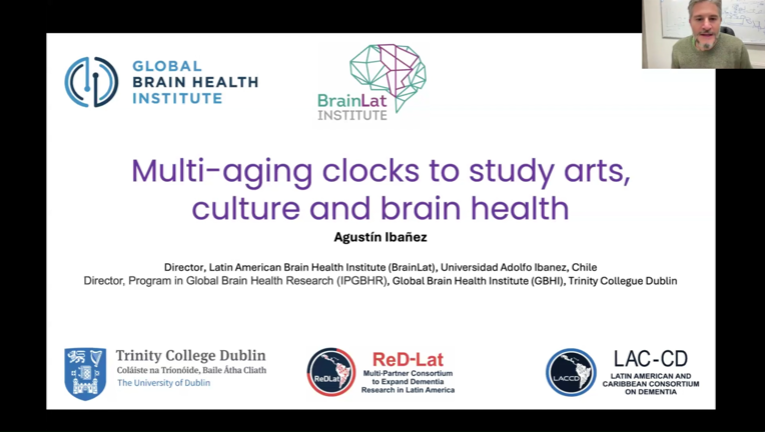
2. Multi-aging clocks to study arts, culture and brain health
Professor Agustín Ibáñez is a global leader in brain health, serving as Director of Global Research Networks at the Global Brain Health Institute (Trinity College Dublin) and Scientific Director of the Latin American Brain Health Institute (BrainLat, Universidad Adolfo Ibáñez). Professor Ibáñez presented a methodological framework for studying how arts and cultural engagement shape brain health across multiple dimensions of biological aging. Rather than relying on a single marker, this integrated multi-aging clocks.
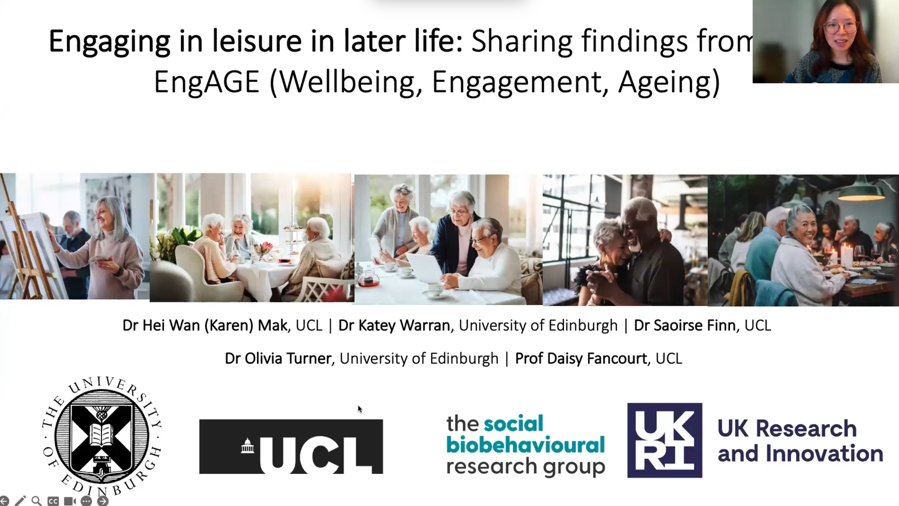
3. Engaging in leisure in later life
We were joined by the team behind WE-EngAGE, a collaboration between UCL and The University of Edinburgh. Researchers shared how leisure activities shape mental, physical, and cognitive wellbeing in later life, and the barriers and enablers that influence participation. The team used a variety of approaches — from analyses of existing cohort data to rich qualitative insights from focus groups and quantitative results from primary data collection.
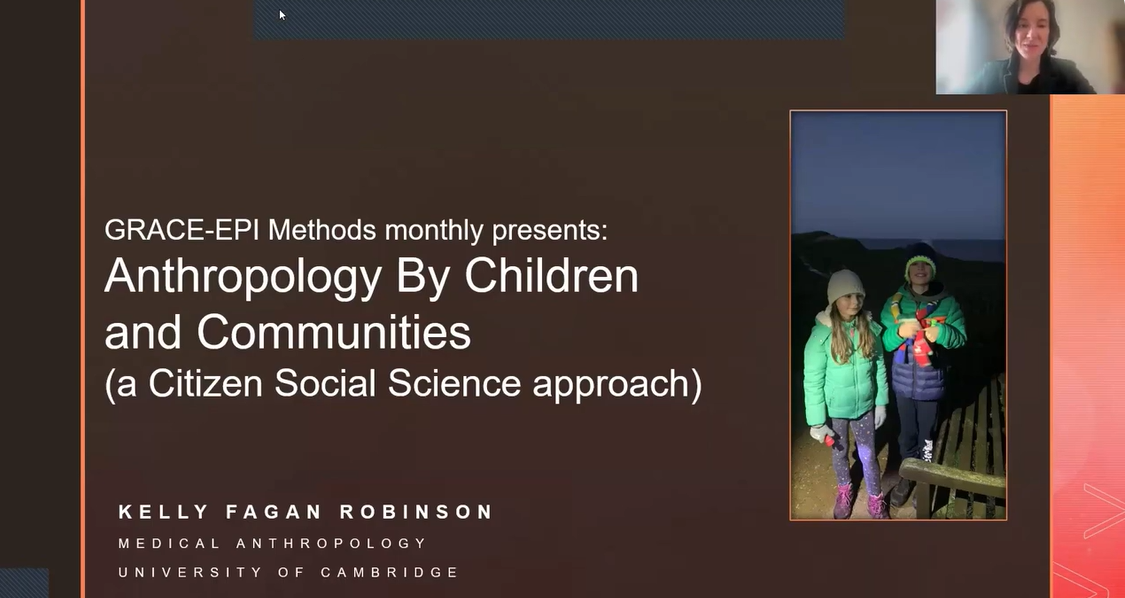
4. Anthropology By Children and Communities
We heard from Dr Kelly Fagan Robinson, Assistant Professor of Medical Anthropology at the University of Cambridge, on the topic of “Anthropology By Children/Anthropology By Communities (ABC)”. This is a methodology designed to centre lived expertise, which is often excluded from research, service design and health policy.
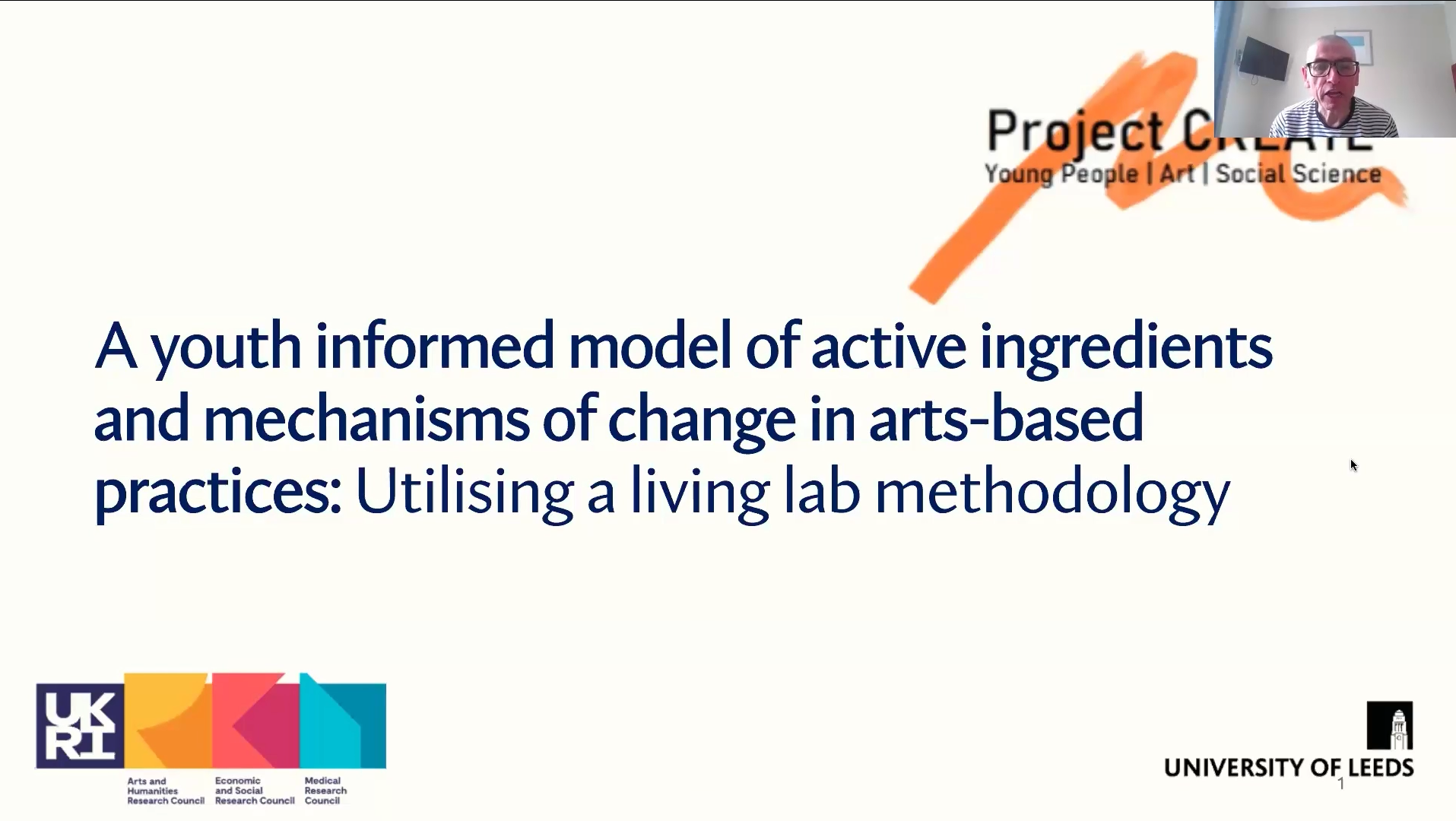
5. Project CREATE
We were joined by the Project CREATE team, a team at the University of Leeds in collaboration with partners and young people. Researchers presented on the role of arts-based programmes in youth mental health and wellbeing, and shared the emerging, youth informed model of active ingredients and mechanisms of change in arts-based programmes (ABPs). This model was foregrounded by a systematic review of the literature and centres lived experience. The transdisciplinary team reviewed and refined this model through a “living lab” methodology which involved collaborating with youth co-researchers whilst engaging in various art forms such as painting, photography and film-making.
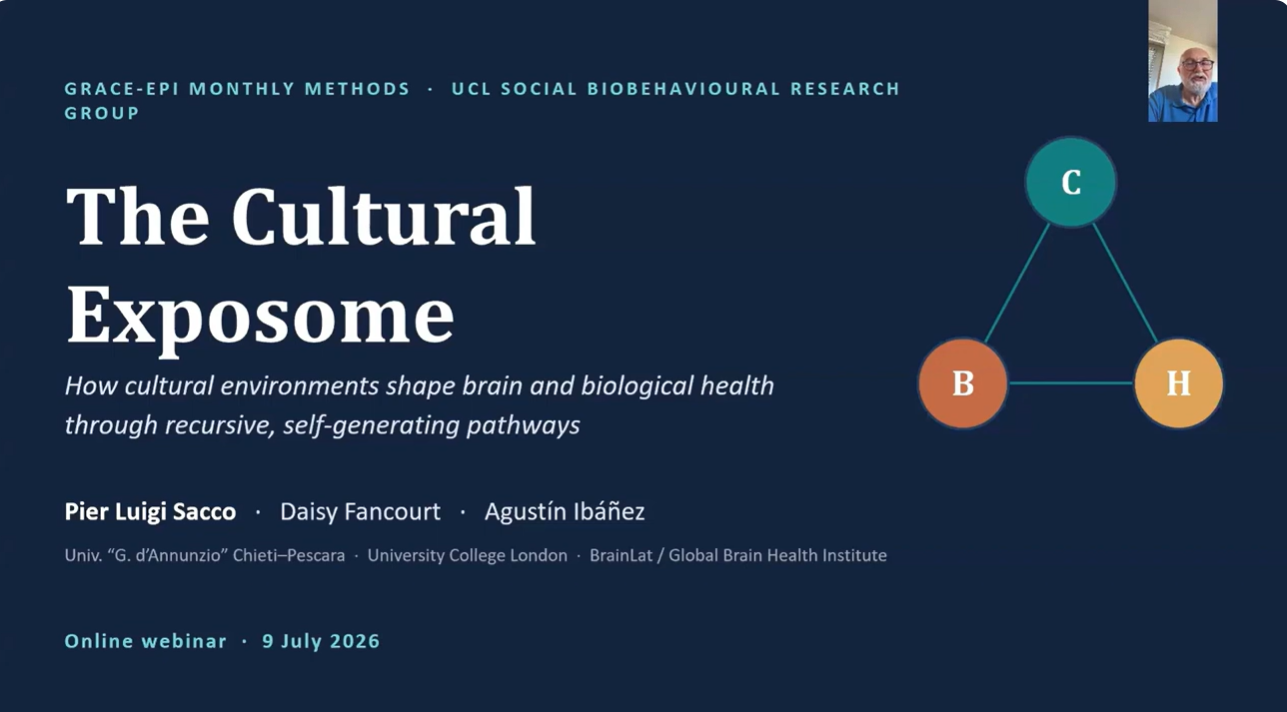
6. The Cultural Exposome
We were joined by Professor Pier Luigi Sacco, Professor of Biobehavioral Economics at the Department of Neuroscience, and Director of the BACH University Center at the University of Chieti-Pescara, Italy. The presentation explored the cultural exposome — the totality of cultural, linguistic, creative, and symbolic exposures across the lifespan.
7. Design for Health: Inclusive and Participatory Practices in the Global South
We were joined by Professor Cláudia Libânio, Associate Professor at the Federal University of Health Sciences of Porto Alegre (UFCSPA), Brazil. The presentation explored how design can contribute to more inclusive, accessible, and equitable health experiences, with a special focus on research developed in and for the Global South, particularly in Brazil.