


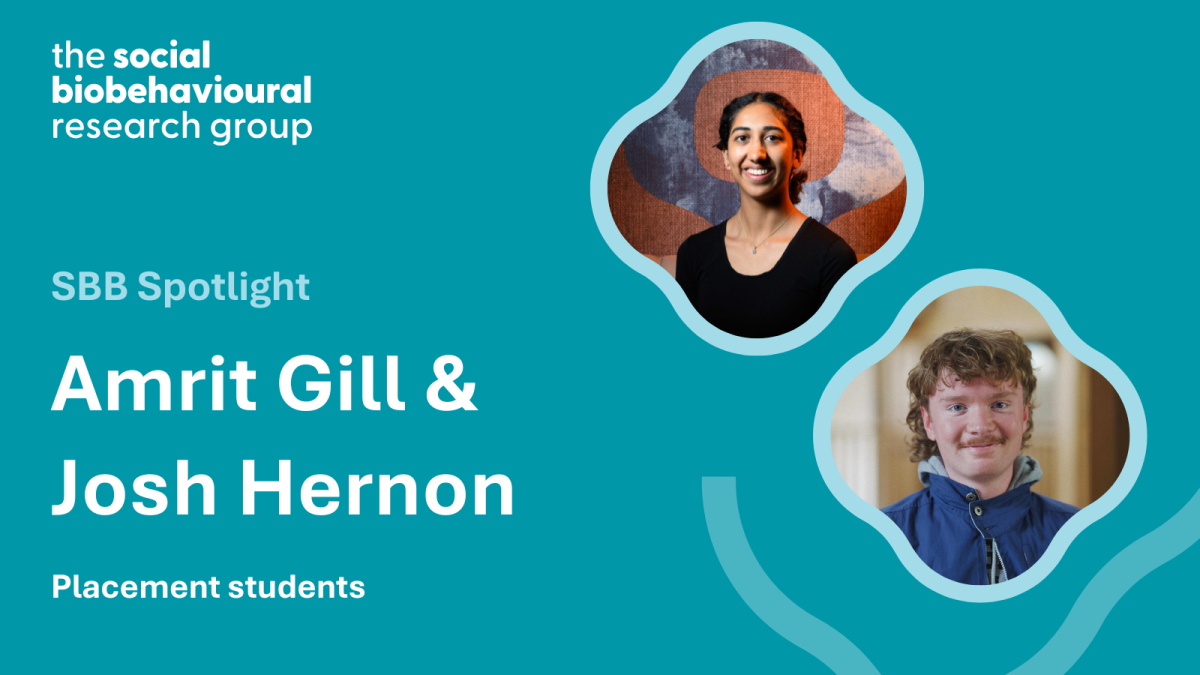
Read on to hear about Amrit and Josh’s experience!
Hi – please introduce yourself!
Amrit: Hi, my name is Amrit Gill, and I’m a Health Psychology Master‘s student at UCL. Over the course of the programme, I have developed a keen interest in arts and wellbeing research, particularly through my dissertation project exploring social prescribing of creative activities (check out this podcast if you want to hear more!)
I was therefore incredibly grateful for the opportunity to gain experience in the creative health field through a summer placement with the Social Biobehavioural Research Group, working on a systematic review focused on the epidemiological evidence on arts and health.
Josh: Hello! I’m Josh Hernon, an MSc Health Psychology student at UCL. During the programme, I enjoyed engaging with the cutting-edge research taking place across the department, especially within the Social Biobehavioural (SBB) Group. This summer placement was a fantastic opportunity to contribute to the growing evidence base for arts and culture as a pillar of health.
What made you interested in this summer placement?
Amrit: I was particularly interested in working on this research project after reading Professor Daisy Fancourt’s Art Cure book, detailing current and extensive research on the far-reaching impact of the creative arts on health. The opportunity to systematically collate evidence in this field excited me, as this has not previously been done at a population level and could provide stronger support for further arts-based health initiatives.
I was also keen to apply my understanding of systematic reviews from the health psychology course and learn how a large-scale review is conducted by working in a large, multidisciplinary team.
Lastly, I was drawn to this project because I wanted to gain practical experience in quantitative research and develop a better understanding of how evidence is collected and evaluated.
Josh: After learning about the role of arts in health and wellbeing during my MSc lectures and working with Professor Daisy Fancourt on my dissertation, choosing this placement was a no-brainer. I was surprised by the breadth of research in this area and excited by the prospect of bringing the existing evidence together through a systematic review.
Arts and cultural engagement can be overlooked as a day-to-day influence on our health, so I was eager to explore their benefits while developing my skills in reviewing and synthesising epidemiological research. The SBB Group does amazing work in creative health and beyond, and I was keen to be involved in a research field I really care about!
What did you find most rewarding about your work experience?
Amrit: I would say the most valuable skill I learned is how to think critically about research and apply that knowledge consistently, especially on a large-scale project (where we are extracting over 200 studies!).
When reviewing papers for data extraction, understanding the scope of the review in depth is vital to ensure you extract relevant information. This takes a lot of attention to detail, and the decisions you make as a researcher can feel arbitrary at times; however, discussing these in meetings with other reviewers really reminded me that this is part of the research process. Decisions get made, unmade and refined, all to better our ability to meet the research objectives.
This helped me become more efficient with the data extraction, where I gained a clearer understanding of the research scope. I hadn’t realised how valuable those in-depth team discussions were before this placement, so that’s definitely something I am going to bring with me into further research.
Josh: Working with Dr Holly Crudgington and the rest of the team taught me a lot about the ins and outs of systematic reviews in practice. I now feel much more comfortable critically appraising existing reviews and, hopefully, conducting systematic reviews of my own in the future.
I also learned the importance of approaching research with a critical lens. Systematic reviewing involves continually weighing up the relevance and quality of individual studies while keeping the bigger picture in mind. This was not always easy when reading fascinating research (this study on gardening activities comes to mind!), but learning to balance curiosity with critical engagement is a skill I’ll carry into future projects.
I really valued the collaborative nature of the placement. Through regular team discussions, we worked together to navigate challenges and find solutions. A problem shared is a problem halved, and it was refreshing to experience research as a genuinely collective effort.
What are you taking away from this experience?
Amrit: I am really grateful to have worked with a small group of brilliant people on this review. They have helped bring joy to otherwise independent work, with many fun chats about arts research and the wonders of data. I am also taking away a much better understanding of how to read research papers, and I am much faster than I was at first at scanning for relevant information.
I cannot wait to see where this project goes from here; it has deepened my passion for this research, and I am confident this review will provide insightful information about this research area.
Josh: This placement has been an incredible experience. I’ve developed practical research skills, deepened my understanding of creative health and had the opportunity to work with a great group of people. Most importantly, it’s made me more enthusiastic about this field, which deserves greater recognition in health research.
I’m really looking forward to seeing the review take shape and hope it will make a difference beyond research by informing conversations about health policy and practice. Thank you to Daisy, Holly and the wider team for the opportunity to contribute to such important work!