In 2019, the UK government announced a radical, major investment in “social prescribing” as part of its NHS Long Term Plan. A type of personalised care, social prescribing connects individuals with non-clinical supports and services within the community to address diverse health and social needs.
Since then, an estimated 3 million people in the UK have received social prescribing and the scheme has spread to over 30 countries. But there has been much controversy about whether social prescribing can genuinely address health needs or instead presents an unregulated service potentially even exacerbating health inequalities.
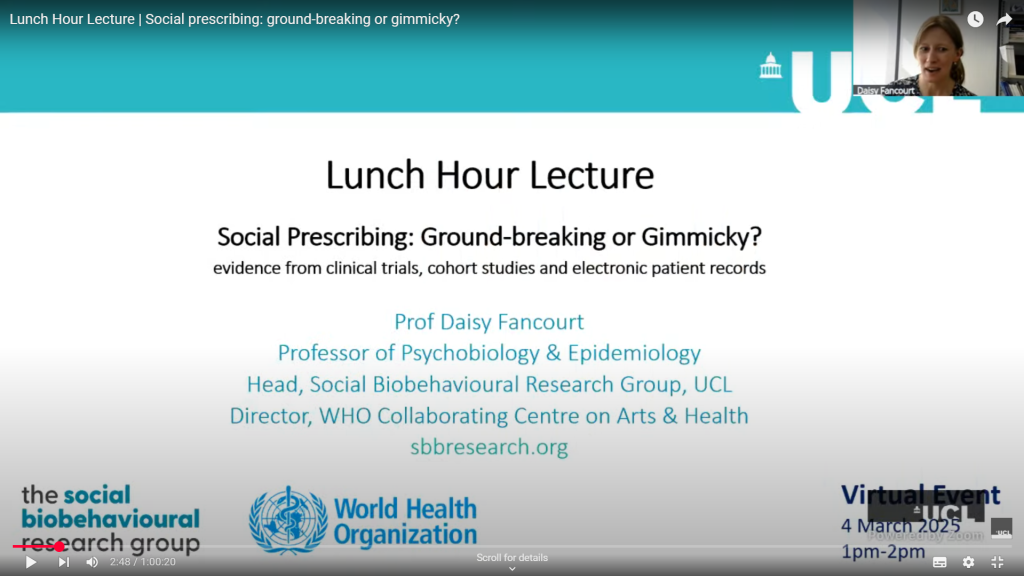
On the 4th March Prof Daisy Fancourt, Professor of Psychobiology & Epidemiology at UCL and Head of the Research Group, presented at the online Lunch Hour Lecture | Social prescribing: ground-breaking or gimmicky?.
The talk considered findings to date, including the substantial body of clinical trials and epidemiological analyses led by UCL’s Social Biobehavioural Research Group. Prof Fancourt examined the evidence available regarding social prescribing referrals, connection to activities, and engagement. The discussion included how this manifests across different cultural contexts and whether social prescribing has equitable reach.