Young people helped develop our work on social prescribing. Here’s what they told us.
We're celebrating International Youth Day with a new blog about our Youth Advisory Group. Read what they have been up to, their key messages about social prescribing and their advice on how to involve young people in decision making moving forward.
12 August 2026
The Government’s recent National Youth Strategyset out a vision of “providing all young people with a safe place to go, someone who cares for them, and a community they feel a part of“.
Social prescribing can play an important role in realising this goal, by connecting people with activities that can support their health and wellbeing, such as volunteering, social groups, nature-based and outdoor activities, arts and sports as well as advice, education and training.
What they have been up to over the last 12 months – sharing their views and developing best practice guidelines.
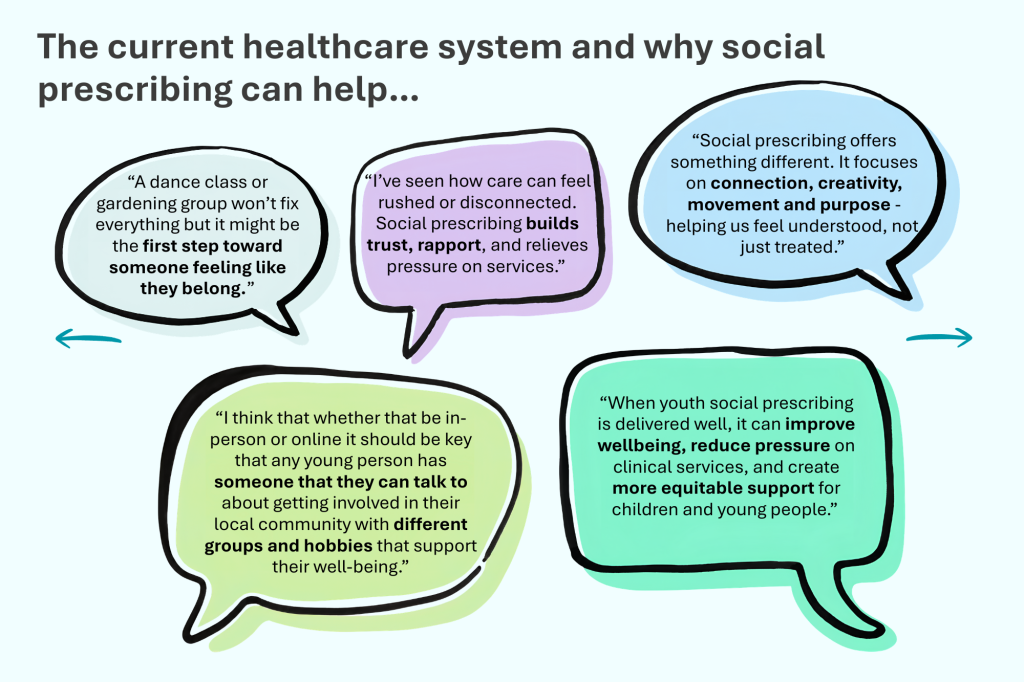
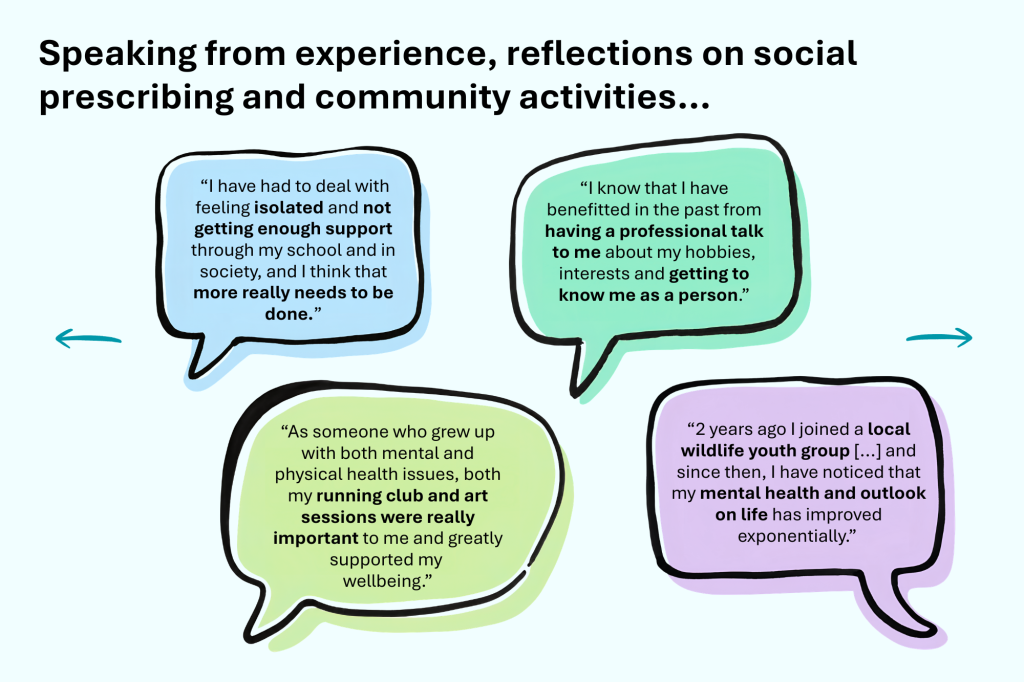
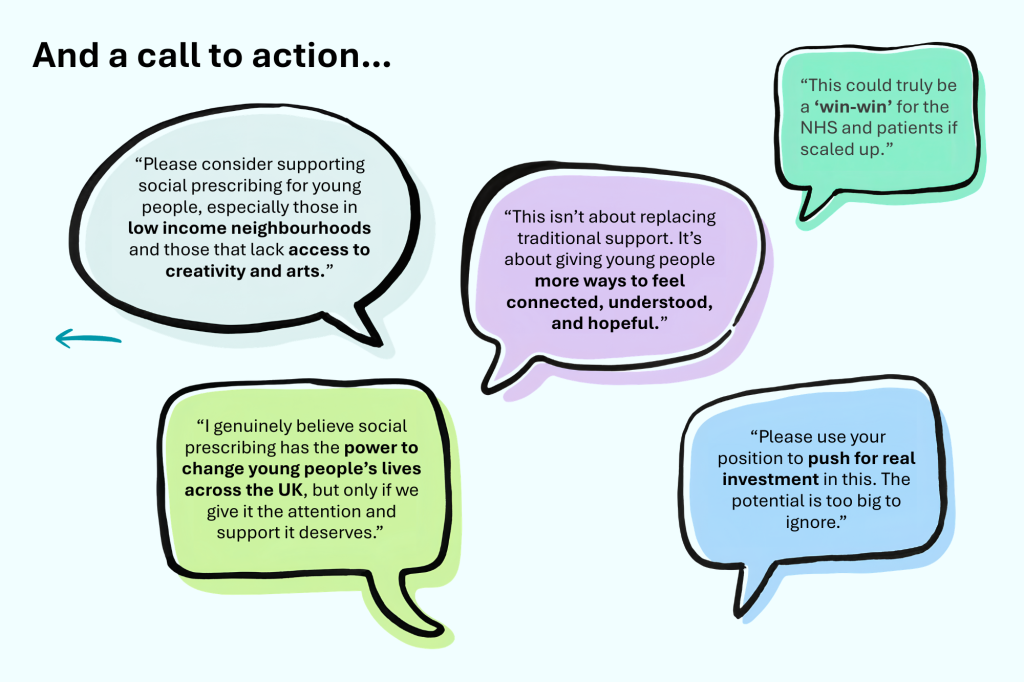
Their thoughts on social prescribing – its potential to support health and wellbeing, plus how to increase its accessibility and sustainability.
Advice on how to involve young people in decision making moving forward – from meaningful feedback to social media stories and recruitment.
What has the Youth Advisory Group been up to?
SPYN’s focus over the last year has been identifying best practice in youth social prescribing, convening five national roundtables. Through online meetings and follow up tasks the Youth Advisory Group helped us to define questions, test ideas, interpret findings and prioritise next steps.
In February 2026 we held our Youth Social Prescribing Symposium at London’s Southbank Centre. This brought together 40 in-person attendees and 150+ online from the UK and beyond to discuss latest research, policy and practice. The event provided a shared space for often-siloed stakeholders across health, education and voluntary sectors, helping strengthen relationships, highlighting evidence and inspiring co-ordinated action.
Youth Advisory Group member XazQ was one of our speakers at the event, sharing her thoughts on why social prescribing is needed and how it can be scaled. You can find a recording of the Symposium above, or read on to hear from more of our Youth Advisory Group’s perspectives.
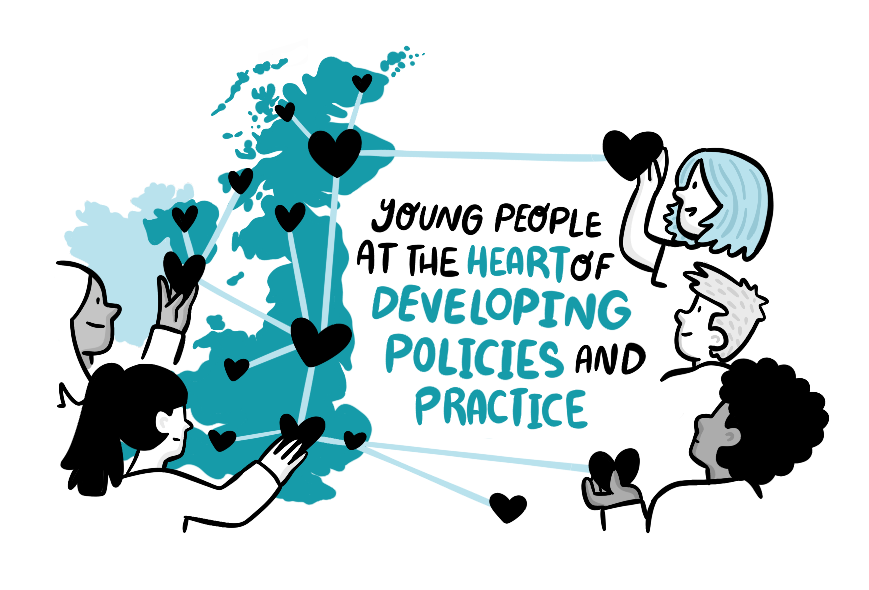
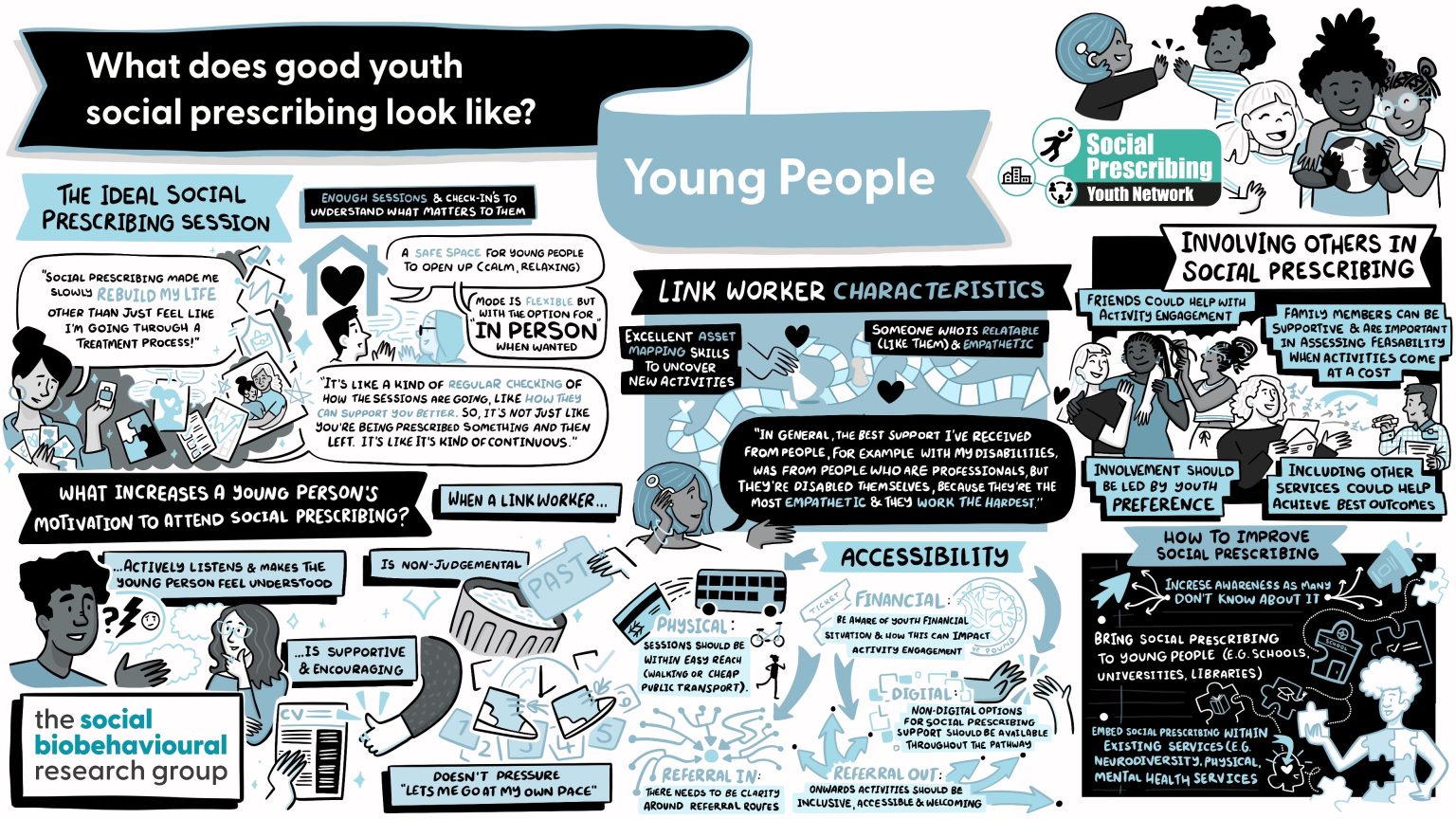
To learn more about what young people think of social prescribing, you can also check out theillustrated summary of our roundtable discussion with young peoplebelow. This included conversations about the ideal social prescribing session and link worker, plus how to increase accessibility and enable more young people to benefit from the service.
What needs to change?
Our best practice guidelines give recommendations for how we can advance the youth social prescribing movement. In summary:
Young people need a real say. Young people’s voices should shape the services designed for them not as a tick-box exercise, but in real, meaningful ways. Check out our tips at the end of this blog!
The people supporting young people need support too. Link workers are often the first person a young person really opens up to. But they can’t do their job properly without manageable caseloads, proper training, regular supervision, time to build trust and to look after their own wellbeing in order to avoid burnout.
Community organisations need stable funding. Many of the activities young people are referred to are run by charities and community groups. These organisations often survive on short-term funding, making it hard to plan for the future.
Technology should help not exclude. Digital tools can make services easier to access, but only if they’re designed with fairness, safety and privacy in mind.
We need better ways to show what works. Numbers alone don’t tell the full story. We need better ways to understand young people’s experiences and track what really makes a difference by listening as well as measuring.
And finally, how can we more meaningfully involve young people in decision making?
Our Youth Advisory Group came up with the following recommendations:
Connections – Create opportunities for young people and other stakeholders to meet and discuss key issues (for example advocacy events and roundtables with policymakers).
Stories – Enable young people to share their lived experiences with policymakers, so they can hear firsthand what’s important to young people (sharing stories on social media can also help with this).
Decision making – Involve young people in each stage of the process. This could be in the form of a youth advisory group.
Feedback – Keep feedback anonymous and easy to provide. Make sure to act on it and show “You Said / We did”. Tokenism is absolutely not helpful in improving youth involvement – actually empowering young people is super important.
Recruitment – Have young people involved with the recruitment of staff and link workers, for example as part of interview panels.
Awareness raising – Involve young people in further spreading the message with their local community. This could include giving assemblies at schools to raise awareness of social prescribing or having youth involvement champions in each Trust whose role is to encourage young people to get involved with service evaluation and co-production.
Enable involvement – Compensate young people for their time and insights, be flexible with methods of engagement and support people with any practical barriers to contributing.
A huge thank you to all the members of our Youth Advisory Group who contributed to this blog and to SPYN’s activities over the last year. Members include: Aidan Dempsey, Brielle, Chris, Eden Byrne, XazQ Sandhu and Zainab Tariq.
This programme of work was generously funded by the Higher Education Innovation Funding (HEIF), managed by UCL Innovation & Enterprise. We thank Rae Goddard (Paraphrase.studio) for the illustrations included throughout this blog.